
Industrial Gearbox Repair
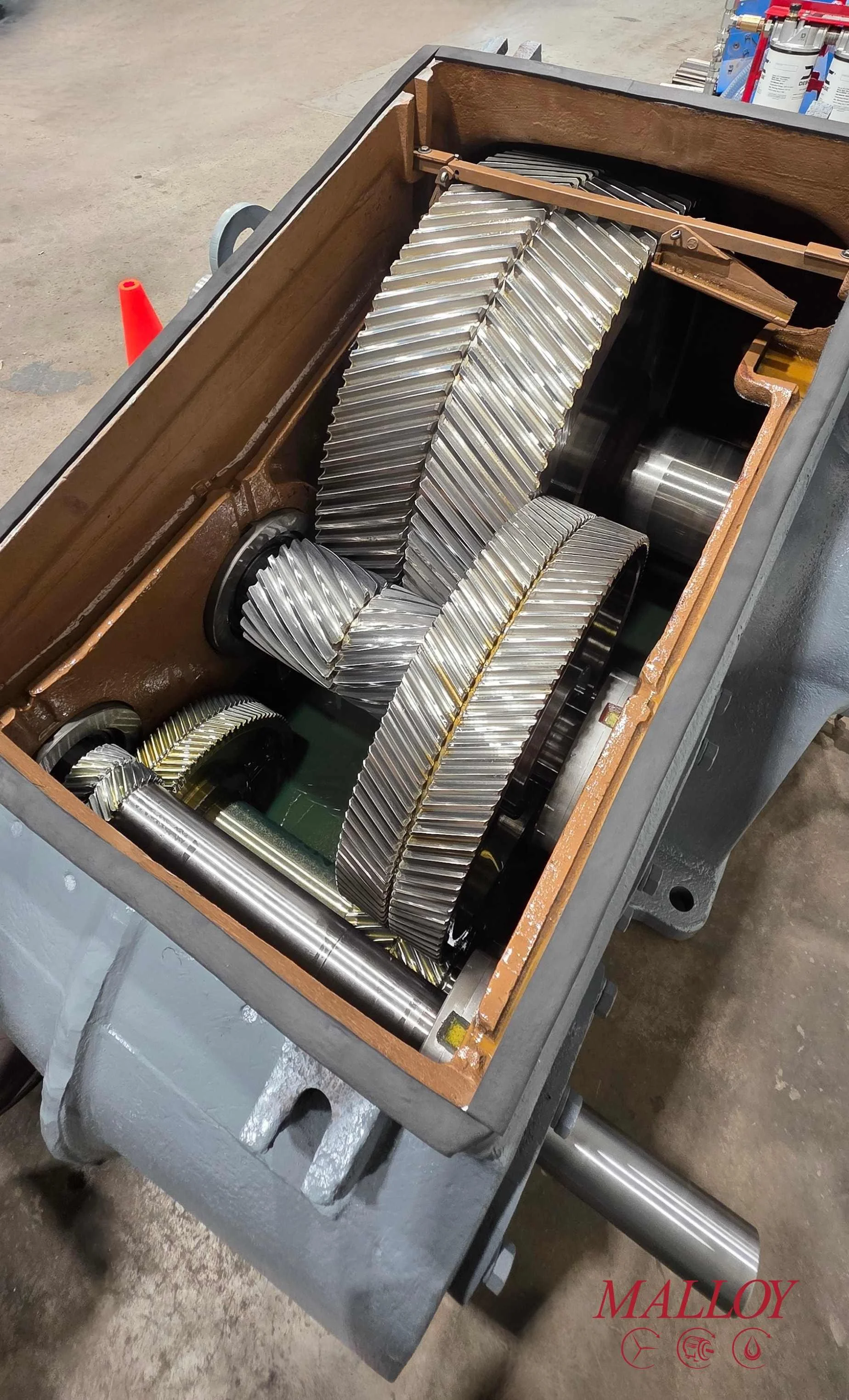
Industrial Gearbox Repair: How the Process Works and When It Makes Sense
When an industrial gearbox fails, the clock starts immediately. Every hour the line sits idle is an hour of lost production, idle labor, and missed shipments. The pressure to get running again fast is real, and it is exactly the pressure that leads to bad decisions: throwing a replacement unit at the problem without understanding the root cause, accepting a fast cheap repair that fails again in six months, or scrapping a perfectly rebuildable gearbox because nobody took the time to evaluate it.
A professional gearbox repair is not just swapping parts. Done right, it is a structured process of failure analysis, precision rebuild, and root cause correction that returns the unit to service with a known condition and a predictable service life. Done wrong, it is an expensive way to reset the failure clock. Understanding what a proper repair involves helps you make the right call when a gearbox goes down, and it helps you recognize the difference between a repair partner who solves the problem and one who just resets it.
What Industrial Gearbox Repair Actually Involves
A complete industrial gearbox repair follows a sequence. Skipping steps is where repairs go wrong.
The process starts with incoming inspection and failure analysis. Before anything gets disassembled, a competent repair shop documents the as-received condition: external damage, oil condition, contamination, and any evidence of the failure mode visible from outside. This is the moment to capture the clues that explain why the gearbox failed, because those clues often disappear during teardown.
Next comes disassembly and detailed inspection. Every component gets cleaned, measured, and evaluated against the original specification and against wear limits. Gears are checked for tooth wear patterns, pitting, scoring, and cracks. Bearings are inspected for race damage, spalling, and electrical erosion. Shafts are checked for runout, journal wear, and keyway condition. The housing is checked for cracks, bore wear, and distortion. This inspection produces the repair scope: what can be reused, what needs reconditioning, and what needs replacement.
The root cause determination happens alongside the inspection. The wear patterns tell the story. Tooth wear concentrated on one end of the face width points to misalignment. Pitting points to contact stress or a lubrication problem. Bearing fluting points to electrical discharge from a variable frequency drive. A repair that fixes the damage without addressing the root cause is a repair that will fail again. This is the single biggest difference between a repair that lasts and a repair that does not.
Then comes the rebuild itself: replacing worn bearings, reconditioning or replacing damaged gears, repairing or replacing shafts, machining the housing back to specification where needed, and reassembling to precise tolerances. Quality shops use new seals, new fasteners where appropriate, and a documented assembly procedure with verified clearances and preload settings.
Finally, testing and documentation close out the repair. The rebuilt unit is run, checked for noise, vibration, and temperature, and the work is documented: what was found, what was replaced, what the root cause was, and what the customer should do to prevent recurrence. That documentation becomes part of the gearbox history file and informs the maintenance program going forward.
The Repair, Rebuild, or Replace Decision
Not every failed gearbox should be repaired, and not every repairable gearbox should be replaced. The right answer depends on the unit, the application, and the economics.
In-place repair makes sense when the defect is external: a failed seal, a damaged breather, a fouled cooler, or loose fasteners. These repairs are fast, inexpensive, and do not require removing the unit from service.
A full rebuild makes sense when the internal components are worn but the housing is sound and the gear set is largely serviceable. Bearings at end of life with healthy gears are a classic rebuild candidate. So is a gearbox with one or two damaged teeth where the rest of the gear set shows acceptable wear.
Replacement becomes the better choice when multiple gear sets show significant damage, when the housing is cracked or corroded through, when the application has changed and the existing unit is mismatched to current duty, or when the total rebuild cost approaches 60 percent of new unit installed cost. At that threshold, a new unit usually wins on total cost of ownership because it comes with a warranty, current efficiency, and a known service life rather than a housing fatigue history you cannot see.
If you are facing this decision, our industrial gearbox troubleshooting guide walks through how to diagnose the failure mode from the symptoms, which is the information you need to make a sound repair-versus-replace call. And if replacement is the answer, our gearbox selection and application guide covers how to specify the right unit so the replacement does not repeat the failure of the original.
What Separates a Good Repair from a Bad One
The industrial gearbox repair market ranges from precision rebuild shops to parts-swappers who reset the failure clock and hope. A few things separate the two.
Root cause analysis is non-negotiable. A shop that hands back a rebuilt gearbox without telling you why the original failed has not actually solved your problem. They have postponed it. The wear patterns, the oil analysis, and the failure evidence all point to a cause, and a competent shop reads those signs and tells you what to fix in the application to prevent recurrence.
Precision matters at assembly. Gearbox performance and life depend on precise bearing preload, gear backlash, and shaft alignment within the unit. A rebuild assembled to loose tolerances will run, but it will not last. Quality shops measure and document the critical clearances rather than assembling by feel.
Component sourcing matters. Replacement bearings, seals, and gears should match or exceed the original specification. Quality shops source from authorized suppliers and recognized manufacturers rather than the cheapest available substitute. At Malloy, our gearbox work draws on authorized partner relationships with Martin, Timken, and SEW Eurodrive, which means the components going into a rebuild meet the original engineering intent.
Testing closes the loop. A rebuilt gearbox should be run and verified before it goes back to the customer. Noise, vibration, and temperature under test conditions confirm the rebuild was done correctly and catch problems in the shop rather than in your plant.
How to Know If Repair Is the Right Call
The decision to repair, rebuild, or replace should be driven by evidence, not by panic or by whoever can get a unit there fastest. The evidence comes from understanding the failure mode.
If the gearbox is making noise but still running, the character of the noise narrows down the source before teardown. If vibration has been trending up, the spectrum points to the failing component. If the oil sample shows specific wear metals, the metals identify which component is shedding material. This is exactly the kind of diagnostic information that turns a guess into a decision, and it is the reason the troubleshooting work matters even when you already know you need a repair.
The faster you can characterize the failure, the faster you can make the repair-versus-replace call, source the right components, and get the unit back in service. A gearbox that gets pulled, evaluated, and scoped quickly is a gearbox that gets back to work quickly.
Choosing a Gearbox Repair Partner
When a critical gearbox is down, the repair partner you call determines how fast you get running and whether you stay running. The right partner brings failure analysis capability, precision rebuild quality, access to quality components, and the engineering judgment to tell you when repair is the right answer and when it is not.
Malloy Electric has rebuilt industrial gearboxes for customers across the northern plains and mountain west since 1945. Our gearbox and power transmission service line covers field troubleshooting, in-shop rebuild, replacement sourcing, predictive maintenance, and engineered upgrades, backed by authorized partnerships with Martin, Timken, and SEW Eurodrive. We operate eight Centers of Excellence in Sioux Falls, Dakota Dunes, Fargo, Mandan, Omaha, Cedar Rapids, Gillette, and Billings.
When a gearbox goes down, the goal is not just to get it running again. The goal is to understand why it failed, fix the root cause, and return it to service with a known condition and a predictable life. That is the difference between resetting the failure clock and actually solving the problem.
We Service What We Sell. We Solve Problems.
Need a gearbox evaluated, repaired, or replaced? Contact your local Malloy Center of Excellence to talk through your application. For deeper technical reference, see our gearbox troubleshooting guide and gearbox selection and application guide.